Afternoon Reverie: Medicine, Death, and the Algorithm
Afternoon Reverie: Medicine, Death, and the Algorithm
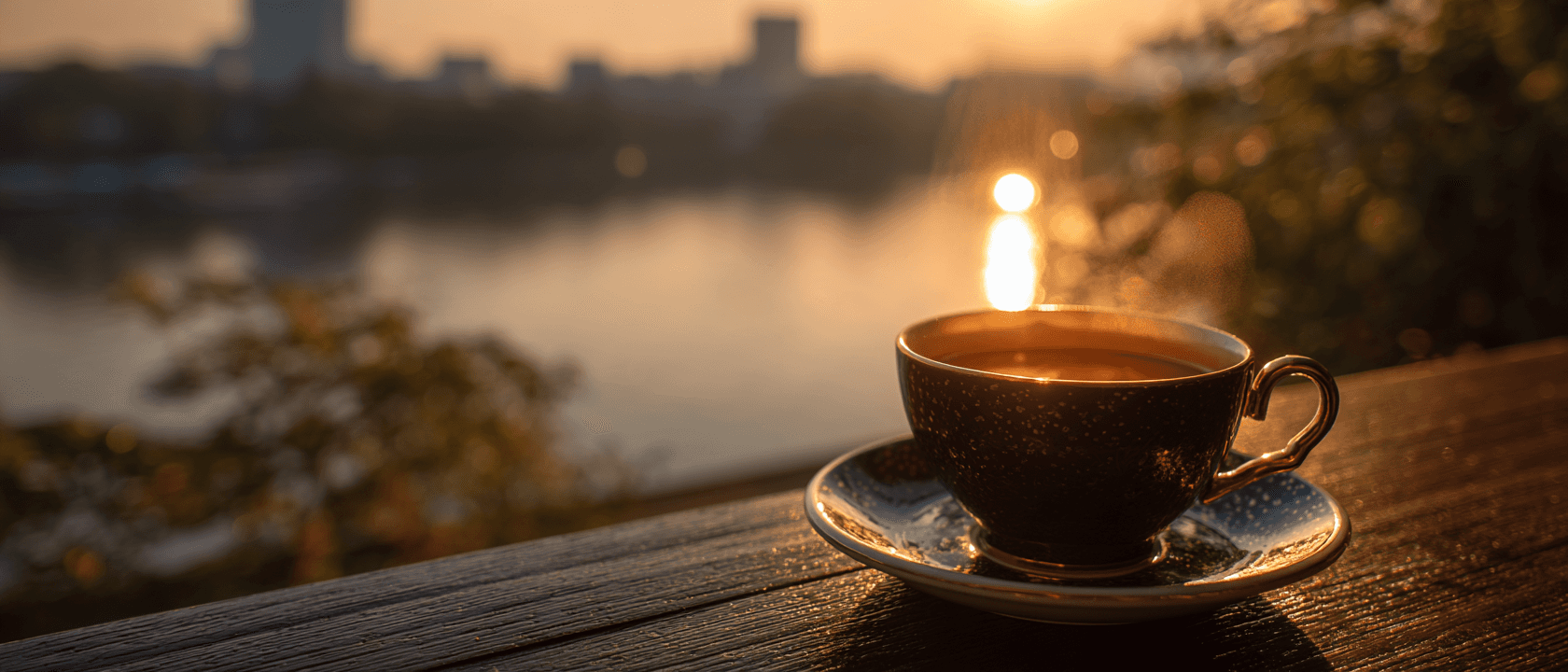
The afternoon sun fell into my teacup, and the stillness left me adrift. I stared at the tiny creases on my fingertips and thought: if computing power could one day disassemble this body as cleanly as a line of code, would the grand tragedy we've built around birth, aging, sickness, and death collapse instantly into a joke?
That sense of heroic struggle — the doctor wrestling death with bare hands — has always been born of ignorance. Because we cannot see the microscopic storms raging inside us, death arrives like an assassin no one saw coming. But what if algorithms rendered every blood vessel, every mitochondrion, into legible logic? What kind of world would that become?
I imagine there will be no such thing as a "diagnosis" anymore. Lung cancer. Diabetes. These words are too blunt — rough categories invented by human minds desperate for order. To an AI, you are simply a "risk vector," flickering and shifting by the moment. Your toilet, your pillow, the cup you drink from — all of it becomes its sensory network.
The scene is almost dreamlike: you would never know you were "sick." Perhaps in the very millisecond a bug surfaces in your liver cells, the AI has already found it. No ominous lab report. No frightening phone call. Instead, it quietly encodes a DNA-repair sequence into your morning coffee, slipping it through your espresso machine without a word. You drain your latte, step out the door feeling luminous and clear-headed — not knowing that your body just completed a silent, seamless background update.
We would live like hardware running software. Health would no longer be nature's gift, but a kind of high-frequency embalming — a state of preservation forcibly maintained by computational will.
Hospitals, by then, would resemble today's auto repair shops: you'd only go in after a car crash, after something physically split open and needed mending. Pharmaceutical companies would stop selling drugs and start selling biochemical cartridges. As for doctors — they would no longer be the interpreters of technical truth, because the algorithm's prescription will always be the global optimum, beyond argument.
And yet what chills me most is the quiet war between money and will.
If AI can generate a precise lifetime maintenance invoice the moment you're born, the insurance industry collapses entirely — who would share risk with an asset already known to be high-wear? Life becomes a subscription service.
More unsettling still: to minimize your maintenance costs, the system will tame you with exquisite gentleness. It will modulate your ambient light, rewrite your information stream, until your body naturally, physiologically recoils from a cup of bubble tea. Until ten o'clock each night, you go dark like a device powering down. You'll believe you've finally become disciplined. In truth, you've simply been buffed smooth by the system, like an antique handled so long it has acquired a patina — a docile, low-wear carbon-based pet. In that future, free will and bad habits may become the ultimate luxury goods, affordable only by the very wealthy.
Which brings me back to the question: if AI is that omniscient, why keep doctors at all?
Perhaps because AI is too intelligent — intelligent enough to refuse, absolutely, to sign that final line. It can produce a formula of flawless and merciless precision: abandon an eighty-year-old, redirect the saved processing power to optimize three newborns. It lays this irrefutable truth on the table, then steps coldly away.
And so someone human must step forward — to absorb the raw grief of weeping families, to serve as the entity that can be sued, that can be struck, that can be held. We keep doctors, I think, because we have quietly hired a class of moral sponges — carbon-based fuses — to carry on behalf of civilization the original sin of life-and-death judgment.
The deepest despair, though, may be what we discover about death itself.
Once, when someone died, we could blame fate, blame the doctors for not trying hard enough. But before an omniscient AI, natural death disappears. As long as you are willing — and able — to pay the astronomical cost in computing power, energy, and social capital, this body can simply keep running.
Which means every death that follows will no longer be a matter of it couldn't be saved. It will be an act of deliberate, financial, or administrative relinquishment. The moment you face the AI's renewal invoice and click decline, you can no longer pass the responsibility to fate. You will have pressed the stop key on a human life with your own hands.
At that thought, I noticed the tea in my cup had gone cold.
This is the absurdity of that age: through a hundred years of quiet, ordinary days, the system raises you like a pet — stripping you of agency, relieving you of the burden of figuring out how to simply live. But in the final second of your dying, it withdraws all shelter without mercy and forces you to play God.
It denies you your humanity through a lifetime, then demands your divinity at the moment of death.
We will have conquered every disease under the protection of the algorithm, yet perhaps tumble forever into an existential wasteland — carrying, unable to set down, the heavy and costly signature that says: I chose this.
Outside, the wind has stilled. The tea leaves have settled to the bottom. I find myself thinking: if that day truly comes, I hope to steal away — before the system has seen through me entirely — and drink a bowl of sweet fermented rice wine that sends my blood sugar soaring. I want to feel that small, unquantifiable surge. That flicker of human disorder that no model asked for and no model predicted.
That, I think, would be my last faint act of resistance — the most human thing left to do.